Winter changes everything about how you train. Ice time gets harder to book, driveways turn into skating rinks you can't use, and the garage becomes your best friend. The good news? With the right training pucks in your setup, you can build faster hands, stronger shots, and better overall feel without setting foot in an arena.
But here's where players get stuck: not all pucks are created equal. Grab the wrong one for your surface, and you're either chasing a runaway disc across the concrete or wondering why your movements feel nothing like real ice. This guide breaks down the three main types of hockey training pucks, weighted, slide, and stickhandling, so you can match your gear to your goals and your training environment.
Types of Hockey Training Pucks Explained
Training pucks fall into three broad categories, each designed to develop a different aspect of your game.
Weighted pucks
These are heavier than regulation and force your muscles to work harder during shooting and stickhandling drills. They're built for building strength and shot power.
Slide pucks or Dryland Pucks
Specialized bottoms that glide smoothly across non-ice surfaces like shooting pads, tiles, and smooth concrete. They replicate the feel of moving a puck on ice so your stick skills transfer directly to game situations.
Stickhandling Pucks
Stickhandling pucks are lighter than standard pucks and engineered for quick-touch drills that develop soft hands, reaction time, and puck control at speed.
| Puck Type | Typical Weight | vs Regulation (6 oz) | Material | Ideal Surface | Primary Benefit |
|---|---|---|---|---|---|
| Weighted Pucks | 10 oz (283g) | +4 oz heavier | Durable rubber | Ice | Shot power & strength |
| Slide/Dryland Pucks | 5 oz (142g) | −1 oz lighter | Rubber + gliders | Smooth non-ice | Stick skill transfer |
| Stickhandling Pucks | 4 oz (113g) | −2 oz lighter | Rubber | Ice or off-ice | Quick hands & control |
Some pucks overlap categories. A weighted stickhandling ball, for example, combines resistance training with hand-speed work. The key is understanding what each type does best so you can build a setup that covers all the bases.
Weighted Pucks for Shot Power Development
If you want a harder shot, you need to train with resistance. Weighted pucks, typically 10 ounces compared to the standard 6-ounce game puck, force your wrists, forearms, and core to generate more power through every shooting motion.
The physics are straightforward: when you train with a heavier load and then switch back to regulation weight, the puck feels lighter, and your release feels faster. It's the same principle baseball players use when warming up with a weighted bat.
Weighted pucks are especially useful during winter months when you're shooting into a net in the garage but not getting the full-body workout of on-ice sessions. Adding that extra resistance keeps your muscles engaged and prevents the loss of shot power that comes from reduced ice time.
For players serious about improving shot power on the ice, weighted pucks are a foundational tool. Pair them with a quality shooting pad to protect your stick blade from rough surfaces, and you've got a setup that builds real-world power without needing a rink.
There's a full breakdown of products that help improve shot power if you want to see how weighted pucks fit into a complete shooting development system.
Slide Pucks for Smooth Surfaces
Standard vulcanized rubber pucks are designed for ice, and they show it. Put one on concrete, a garage floor, or even plywood, and it grips, skips, and generally behaves nothing like it would in a game. That's where slide pucks, also called dryland pucks, come in.
Slide pucks feature a bottom surface engineered to glide across non-ice materials. Some use a polymer base, others incorporate ball bearings or specialized plastic compounds. The goal is always the same: replicate the smooth, predictable movement of a puck on ice so your muscle memory actually translates when you hit the rink.
The Extreme Dryland Puck is a solid example of this category. Its construction allows it to slide naturally across shooting pads, dryland tiles, and other training surfaces while maintaining the look and approximate weight of a regulation puck. When you're working on passing, receiving, or basic stickhandling patterns, that realistic movement matters.
If you've read the dryland stickhandling puck review, you know these pucks can transform a basic garage setup into a legitimate training environment. The difference between fighting your puck and flowing through drills is often just a matter of choosing the right slide puck for your surface.
Stickhandling Pucks for Quick Hands
Hand speed separates good players from great ones. Stickhandling-specific pucks are built to help you develop that quickness through drills that demand fast, precise movements.
Many stickhandling pucks are lighter than regulation; the Lightweight 4 oz Puck, for instance, shaves two ounces off standard weight. That reduced mass allows for faster lateral movements and quicker changes of direction, which trains your hands to react at game speed (and beyond).
There's also a place for stickhandling balls in this category. The Swedish Stickhandling Ball, made of dense wood, bounces and rolls differently than a puck, forcing you to adapt your touch constantly. The Extreme Stickhandling Ball and Heavy Stickhandling Ball add further variation; the heavier options build strength, while the lighter ones emphasize speed and control.
The best training setups include a mix of weights and shapes. When your hands learn to control pucks of different sizes and masses, you develop a more adaptable, confident touch that holds up under pressure.
Matching Training Pucks to Your Training Surface
Here's where a lot of players go wrong: they buy a great puck but use it on the wrong surface, and the whole experience suffers.
The Green Biscuit series, Original, Snipe, and NHL team versions, slides beautifully on smooth concrete, asphalt, and outdoor surfaces. If you're training in a driveway or outdoor basketball court, these are your go-to options. The V-90 Puck works similarly for outdoor passing and shooting on rougher surfaces.
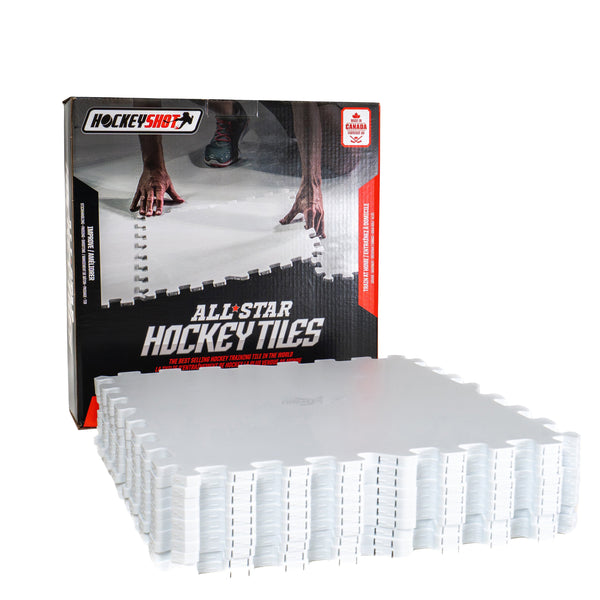
For dedicated indoor setups with shooting pads or dryland tiles, the Extreme Dryland Puck offers a realistic ice-like glide. The All-Star Dryland Flooring Hockey Tiles are specifically engineered with a smooth surface that pairs well with dryland pucks, creating a consistent training feel that mimics on-ice conditions.
If you're shooting into a net, you'll also want a proper pad underneath. Shooting pads for proper surface use protect your stick blade from damage while giving slide pucks the surface they need to perform correctly.
The general rule: smoother surfaces allow for more puck options, while rough surfaces require purpose-built outdoor pucks. Investing in both quality pucks and proper flooring gives you the most versatile setup.
Winter Training Tips Using Hockey Training Pucks
Cold weather changes how materials behave. Rubber stiffens, plastic can become brittle, and that smooth garage floor might have condensation issues you didn't notice in September.
A few winter-specific considerations for your training setup:
Keep your pucks at room temperature before training. Cold pucks don't slide as well and can feel noticeably different from how they do in regulated temperatures. If you're training in an unheated garage, bring your puck bag inside between sessions.
Concrete floors in winter often collect moisture from temperature swings. Wipe down your shooting pad or tiles before starting, or invest in dryland flooring that handles humidity better than bare concrete. A consistent surface means consistent puck behavior, which means better skill transfer.
Vary your training to account for what winter takes away. With less ice time, you might focus more on shooting volume and stickhandling patterns, both areas where a proper puck setup at home can match or exceed what you'd get in limited rink sessions.
Finally, use the off-ice months to build the foundation. Weighted pucks for shot power, slide pucks for passing accuracy, stickhandling pucks for soft hands. When spring ice time returns, you'll feel the difference.
Build Your Winter Setup
The best training puck for your situation depends on your goals and the surface you use. If you're chasing shot power, weighted pucks belong in your bag. If you're building a garage or basement training zone, slide pucks and proper flooring transform the experience. If hand speed is the priority, lightweight pucks and stickhandling balls challenge your reaction time in ways that a game puck can't.
Explore the full hockey pucks and balls collection to see how different options fit your training plan. Whether you're a competitive player trying to maintain edge during a long winter or a parent setting up a dedicated training space for your kid, the right pucks make every session count.
Winter doesn't have to mean skill loss. With the right gear, it can mean the opposite.