Living in an apartment or condo doesn't mean your young player has to wait for ice time to develop their skills. With the right approach and equipment, meaningful hockey training can happen in surprisingly small spaces. A 6x6 foot area in a living room, a hallway, or a corner of a bedroom can become a legitimate practice zone.
The key is working with your constraints rather than against them. This guide covers how to assess your available space, choose compact equipment that delivers real training value, manage noise concerns in multi-unit buildings, and structure drills that build skills without requiring a garage or backyard.
Understanding Your Space Limitations
Before buying any equipment, take an honest look at what you're working with. Measure the actual dimensions of potential training areas. Consider ceiling height, nearby furniture, and anything breakable within stick-swinging distance.
Most effective small-space training focuses on stickhandling and puck control rather than shooting. A 6x6 foot area provides enough room for stationary stickhandling drills, weight transfer exercises, and basic puck manipulation. An 8x8 foot space opens up options for movement-based drills and simple passing work against a wall or rebounder.
Think about when training will happen. If sessions need to occur while others are home, noise and floor protection become priorities. If you have windows of time when the space is yours alone, you can be more flexible with drill selection.
Also consider storage. Equipment that needs to be set up and broken down after each session should be genuinely easy to move. Gear that can live in a corner or closet between uses makes training more likely to happen consistently.
Best Compact Equipment for Small Areas
Small-space training requires equipment designed for portability and minimal footprint. The good news: some of the most effective training tools also happen to be the most compact.
Shooting Pads
A quality shooting pad protects your floors from stick wear and allows pucks to glide naturally. Many pads roll up for storage, making them ideal for apartments where permanent setups aren't possible. The guide to choosing the best shooting pad breaks down size options and materials to help match your space and training goals. The shooting pads collection includes roll-up options specifically designed for easy storage.
Stickhandling Tools
Danglers and obstacle trainers create structured stickhandling challenges without requiring large footprints. The Edge Dangler and Extreme Dangler both work in tight spaces and store vertically when not in use. Cones and small obstacles can substitute for more elaborate setups. For a deeper look at options, the stickhandling equipment collection shows the range of tools available.
Pucks and Balls
Training pucks designed for indoor use slide smoothly on shooting pads and hard floors without the bounce and noise of regulation pucks. Stickhandling balls offer variety and often work better than pucks on carpet or uneven surfaces. Having multiple puck and ball types lets you train different aspects of touch and control.
Compact Nets
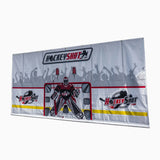
If your space allows any shooting at all, small pop-up nets or skill nets provide targets without dominating the room. These fold flat and can slide under a bed or into a closet. The compact hockey goals and nets collection includes options sized for limited spaces.
For comprehensive guidance on building your setup, essential gear for off-ice shooting and essential gear for off-ice stickhandling cover what works across different training environments.
Vertical Storage Solutions
In small living spaces, floor space is precious. Thinking vertically keeps equipment accessible without cluttering your home.
Sticks can hang on wall-mounted hooks or stand in a corner holder. Nets that fold flat lean against walls or slide into closet gaps. Shooting pads roll up and fit in closet corners or under beds. Danglers and obstacle equipment often have holes or loops designed for hanging on hooks.
A dedicated storage bin or bag keeps smaller items (pucks, balls, cones) organized and portable. When everything has a home, setup and breakdown become quick routines rather than obstacles to training.
Consider furniture that doubles as storage. An ottoman with internal storage can hold pucks and accessories. A coat closet with an added shelf creates space for rolled pads and folded nets.
Noise Management for Multi-Unit Buildings
Noise is the primary concern for apartment and condo dwellers. Puck handling on hard floors, shots into nets, and general stick movement all create sounds that travel to neighboring units.
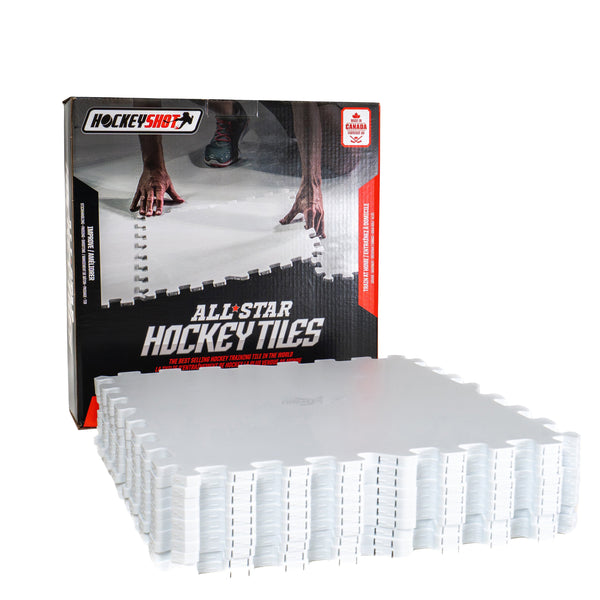
Start with your training surface. A shooting pad on carpet absorbs more sound than one on hardwood. Adding a rubber mat or foam tiles underneath further dampens vibration. These layers also protect floors from accidental damage.
Choose training tools that minimize impact noise. Soft stickhandling balls produce less sound than hard pucks. Dryland pucks designed for smooth surfaces create less vibration than regulation rubber. Avoid shooting drills entirely if sound is a serious concern, focusing instead on handling work that keeps the puck in contact with the surface.
Time your sessions thoughtfully. Early evening hours typically cause less disruption than early morning or late night. Brief sessions spread across multiple days create less concentrated noise than long single sessions.
Communicate with neighbors proactively. Letting them know about your training schedule and inviting feedback prevents complaints from escalating. Most people are understanding when approached respectfully.
Effective Drills for 6x6 and 8x8 Spaces
Small spaces demand focused drills. These exercises build real skills within tight constraints.
Stationary Stickhandling (6x6 minimum)
Stand in place and work through stickhandling patterns: side to side, front to back, figure eights, toe drags. Focus on soft hands and keeping your head up. Set a timer for 60-second intervals and challenge yourself to maintain control throughout.
Weight Transfer Practice (6x6 minimum)
Practice shifting your weight from foot to foot while maintaining puck control. This simulates the movement patterns of skating while staying in place. Add forehand and backhand reaches to extend your range of control.
Wall Passing (8x8 with wall access)
Stand 4 to 6 feet from a wall and practice passing into a target zone, receiving the return, and passing again. Work on both forehand and backhand. A piece of tape on the wall creates an aiming point. Use soft pucks or balls to reduce noise.
Obstacle Navigation (8x8 recommended)
Set up three to five small obstacles (cones, household items, or dedicated training tools) and practice weaving through them while maintaining puck control. Start slow and increase speed as control improves. Reset the pattern regularly to prevent memorization.
Release Mechanics (6x6 minimum)
Practice shooting motion without releasing the puck. Focus on weight transfer, stick positioning, and wrist roll. This builds muscle memory for proper shooting form without requiring space for the puck to travel or a target to absorb impact.
Setting Up Your Small Space Training Zone
Creating a dedicated training area, even a temporary one, increases the likelihood of consistent practice. Here's how to set up effectively in limited space.
Choose your location wisely. Hard floors work better than carpet for most drills, but carpet with a shooting pad on top can work. Avoid areas near fragile items, glass doors, or high-traffic zones. A corner often works better than the center of a room.
Protect your floors. Even with proper pucks and pads, training creates wear. A rubber mat or interlocking foam tiles underneath your shooting pad provides extra protection and sound dampening. This layer can roll up with your pad for storage.
Create setup and breakdown routines. If equipment needs to move after each session, make the process fast and consistent. Knowing exactly where everything goes reduces friction and makes training more likely to happen.
Start small and expand. Begin with the minimum equipment needed for basic stickhandling. Add pieces as you confirm that training is happening consistently and that your space and noise management work. A shooting pad and a few pucks cost less than a single private lesson and provide unlimited practice opportunities.
Involve your player in setup. Kids who help arrange their training space feel ownership over the process. That ownership translates to motivation and consistency.
Making It Work
Living in a small space creates real constraints, but it doesn't have to stop hockey development. Players have built elite-level hands in basements, bedrooms, and yes, apartments. The skills that matter most, particularly puck control and stickhandling, require less space than most families assume.
The real key is consistency. A player who trains for 15 minutes daily in a 6x6 corner develops faster than one who waits for weekly ice time. Small-space training fills the gaps between practices and games, turning otherwise lost time into skill development.
Your apartment or condo can become a training asset rather than a limitation. With the right equipment, thoughtful setup, and creative drill selection, meaningful hockey development happens anywhere.